
A brief history of terrazzo tiles
Terrazzo tiles have been a favourite in interior design for centuries, known for their unique look, durability, and versatility. But what exactly are terrazzo tiles, and why have they remained so popular?
In this comprehensive guide, we’ll explore terrazzo’s history, composition, benefits, and uses, allowing you to understand whether it is the best material for your next building project.
Terrazzo has a rich history that dates back to ancient Egypt, but it became widely popular during the Renaissance in Venice, Italy. Venetian workers used marble scraps to create affordable flooring for terraces, hence the name “terrazzo,” which means “terrace” in Italian.
The method involved embedding marble pieces in clay and then polishing the surface to a smooth finish. Over time, the technique evolved, incorporating cement, glass, and other materials, leading to the modern terrazzo we know today.
The composition of terrazzo tiles
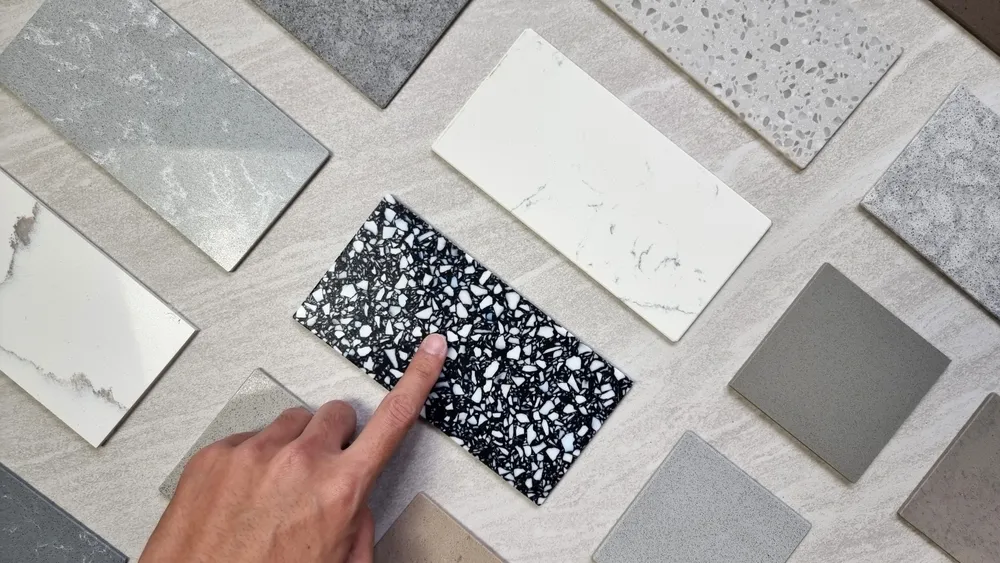
Terrazzo tiles are a composite material, traditionally made from a mix of marble, quartz, granite, and glass chips set in a cement or epoxy binder. The aggregate (chips) can vary in size, colour, and type, allowing for a wide range of design possibilities. Here’s a breakdown of the main components:
- Aggregates: these are the chips that give terrazzo its distinctive look. They can be made from marble, quartz, granite, glass, and even metal.
- Binders: the binders hold the aggregates together. Cementitious binders are the traditional choice, but epoxy resins are now also commonly used for their durability and range of colours.
- Pigments: these are added to the binder to create different base colours, further enhancing the design possibilities.
Types of terrazzo tiles
Terrazzo tiles come in various types, each with its own unique properties and uses:
- Cementitious terrazzo: made with cement binders, this traditional terrazzo is porous and requires sealing to protect against stains. It’s known for its classic, timeless look.
- Epoxy terrazzo: this modern version uses epoxy resin as the binder. It’s non-porous, more durable, and offers a wider range of colours and design options. Epoxy terrazzo is also thinner and lighter than cementitious terrazzo.
- Monolithic terrazzo: a seamless flooring system where terrazzo is poured in place and ground to a smooth finish. It offers a continuous, sleek appearance without grout lines.
- Terrazzo tiles: precast tiles that can be easily installed like regular tiles. They offer the beauty of terrazzo with the convenience of tile installation.
Applications of terrazzo tiles
Thanks to their versatility, terrazzo tiles can be used in a variety of settings:
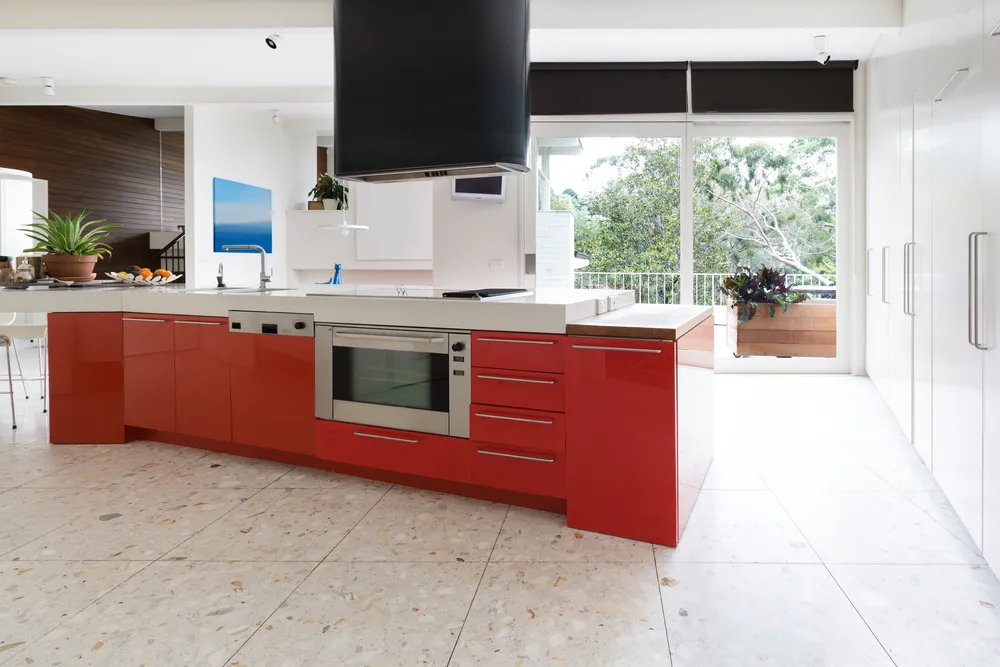
- Residential spaces: terrazzo is perfect for kitchens, bathrooms, and living areas, offering a durable and stylish flooring option. It can also be used for countertops, backsplashes, and even custom furniture pieces.
- Commercial spaces: terrazzo is commonly used in commercial buildings, such as schools, airports, hospitals, and retail stores, due to its durability and low maintenance requirements.
- Public spaces: the durability and aesthetic appeal of terrazzo make it an excellent choice for public spaces like museums, government buildings, and transportation hubs.
Outdoor spaces: while cementitious terrazzo can be used outdoors, epoxy terrazzo is generally not recommended due to its sensitivity to UV light.
tart your next terrazzo project with the flooring specialists from Policrete
With a reputation for excellence and a commitment to quality, Policrete transforms spaces with stunning terrazzo flooring solutions. Our team of experts will guide you through every step, from design to installation, ensuring a seamless and beautiful finish. Whether it’s a residential, commercial, or industrial space, trust Policrete to bring your vision to life with elegance and durability. Begin your journey to exceptional concrete flooring with Policrete today.